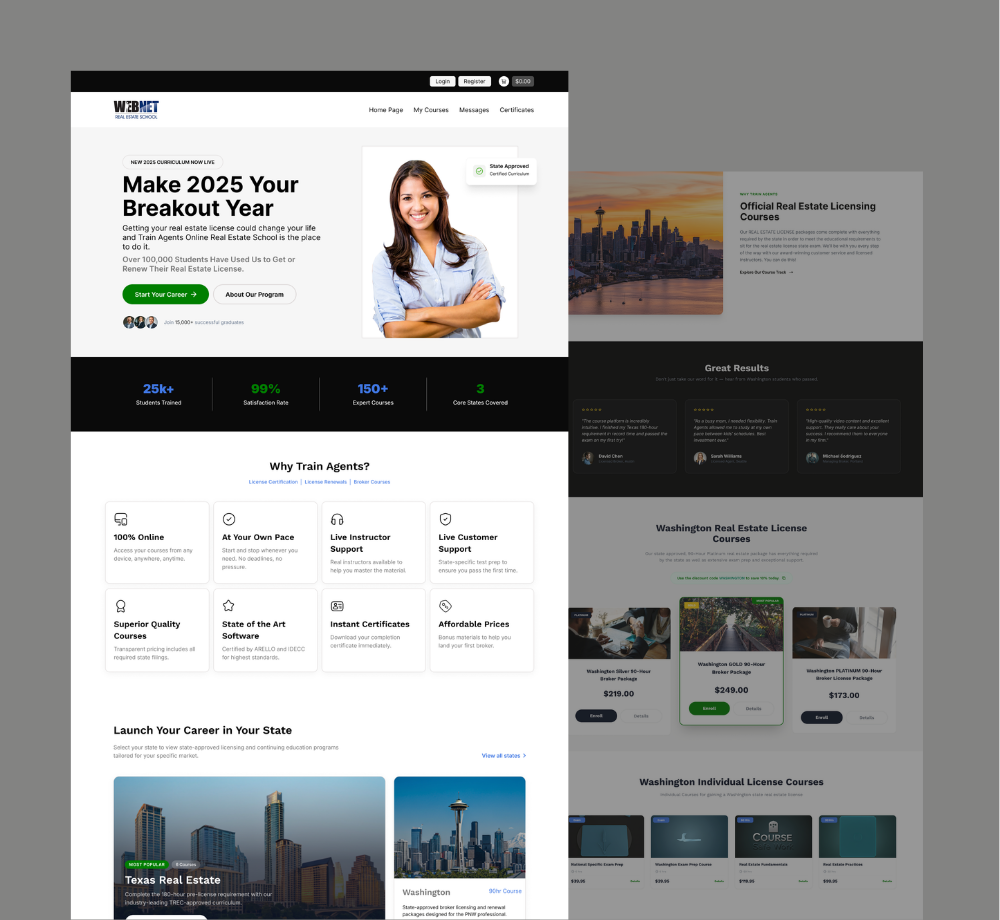
Webnet is a comprehensive online real estate school platform designed to help agents get licensed and renew their certifications across multiple states. Rebuilt module by module from a legacy LMS, the platform replaces a single rigid theme with a modern, school-branded experience that covers the full learner lifecycle, from the first marketing page visit through course enrollment, lesson reading, quizzes, final exams, certification, and ongoing CE compliance tracking.
The platform features state-specific course catalogs for Texas and Washington, an interactive student dashboard with real-time progress tracking, an AI-assisted lesson reader, a full assessment workflow with attempt history, automated invoicing through Stripe, and a dedicated support center, all built on Vue.js with a Laravel API backend.
The Issue At Hand
Real estate students and schools were restricted by an outdated, rigid LMS that lacked white-labeling capabilities, forcing all users into a single, unbranded centralized theme.
The platform lacked direct student-instructor communication, routing all queries through a slow support inbox. The public site also suffered from a clunky checkout flow with no persistent shopping carts, discount systems, or dedicated course listing pages.
Students had no self-service tracking for progress or certificates. To fix this, the system required a modular, state-compliant modernization that could seamlessly coexist with live legacy modules without disrupting active user sessions.
Legacy technology stack with a single centralized theme, causing poor performance, high maintenance burden, no school-specific branding, and no modular path to scale features independently.
No direct communication channel between students and instructors, driving up support ticket volume and leaving course-specific questions unanswered for days.
Outdated public-facing experience with no dedicated listings for states, schools, courses, or packages, and no shopping cart persistence, discount system, or integrated payment processing.
No real-time progress tracking, certificate generation, or transcript management, compounded by a module-by-module migration requirement to keep legacy systems running without disrupting active students.
Our Collaboration
Phase 1
Discover
Phase 2
Design
Phase 3
Build
Phase 4
Launch




Before writing a single line of code, we conducted a thorough analysis of the existing platform, multi-state licensing requirements, business workflows, and future scalability needs. This phase mapped real estate licensing requirements across Texas, Washington, and other key states, and shaped every major technical decision that followed, helping the team avoid overengineering a white-label solution that didn't match the platform's actual scale.
Key Activities
Multi-State Compliance Mapping
Documented licensing requirements across Texas, Washington, and other key states in detail, pre-licensing hours, continuing education cycles, exam proctoring rules, and certificate reporting standards, to bake compliance directly into the data model rather than bolting it on after launch.
Student Journey Mapping
Mapped the complete path from course discovery through enrollment, lesson completion, quizzes, final exams, and certificate generation to identify every point where students were dropping off or getting stuck on the legacy platform.
Admin Pain Point Audit
Interviewed school administrators directly to understand which manual tasks, invoice lookups, certificate reissues, enrollment troubleshooting, consumed the most operational time, prioritizing those workflows in the new build.
White-Label Architecture Decision
Initially scoped as a fully database-driven theming engine, further analysis showed the platform serves a small number of active schools with largely similar page structures. A frontend-driven theming approach was adopted instead, supporting both light and dark school themes without the overhead of a full template engine.
Technology Stack Selection
Based on these findings, the stack was confirmed as Vue.js for the frontend with Bootstrap 5 for consistent, responsive layout, and Laravel for backend services, authentication, and business logic, balancing development speed against the platform's actual scale and compliance needs.
Design & Prototypes
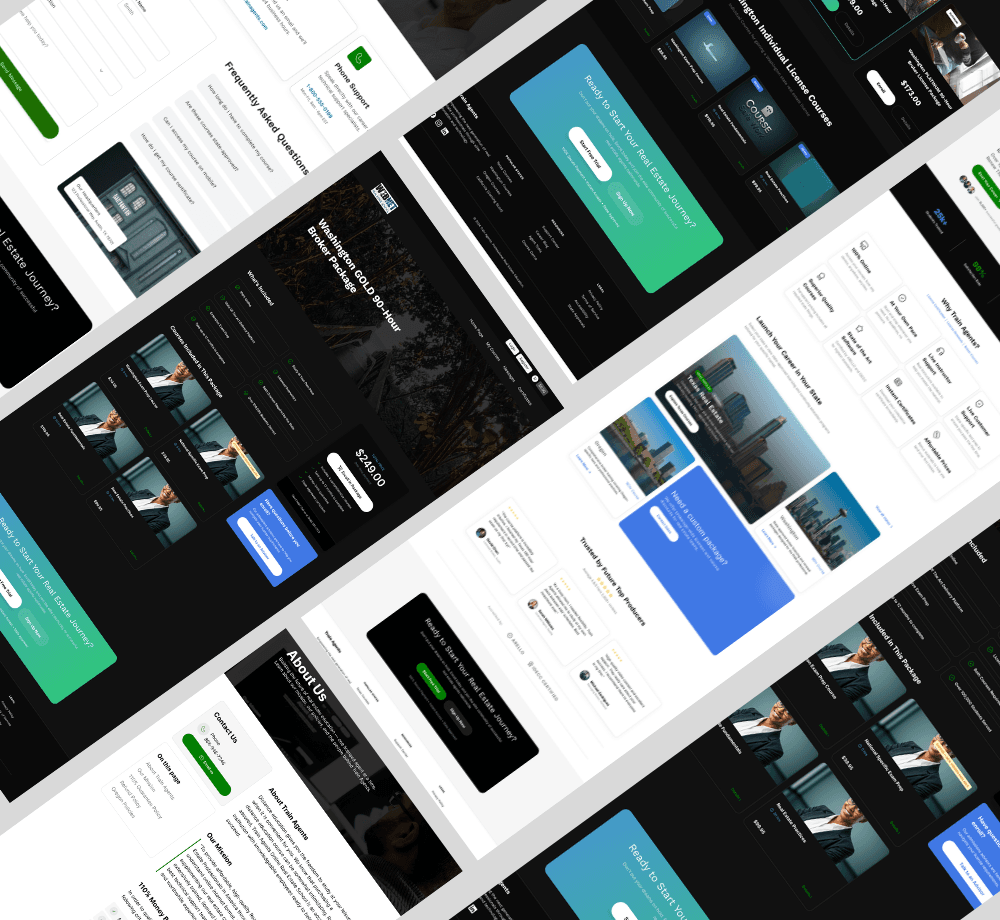
A detailed Figma system covered every dashboard state, from empty progress bars to full certification completion screens, across both light and dark themes, ensuring no edge case was left undesigned before development began.
Open in figma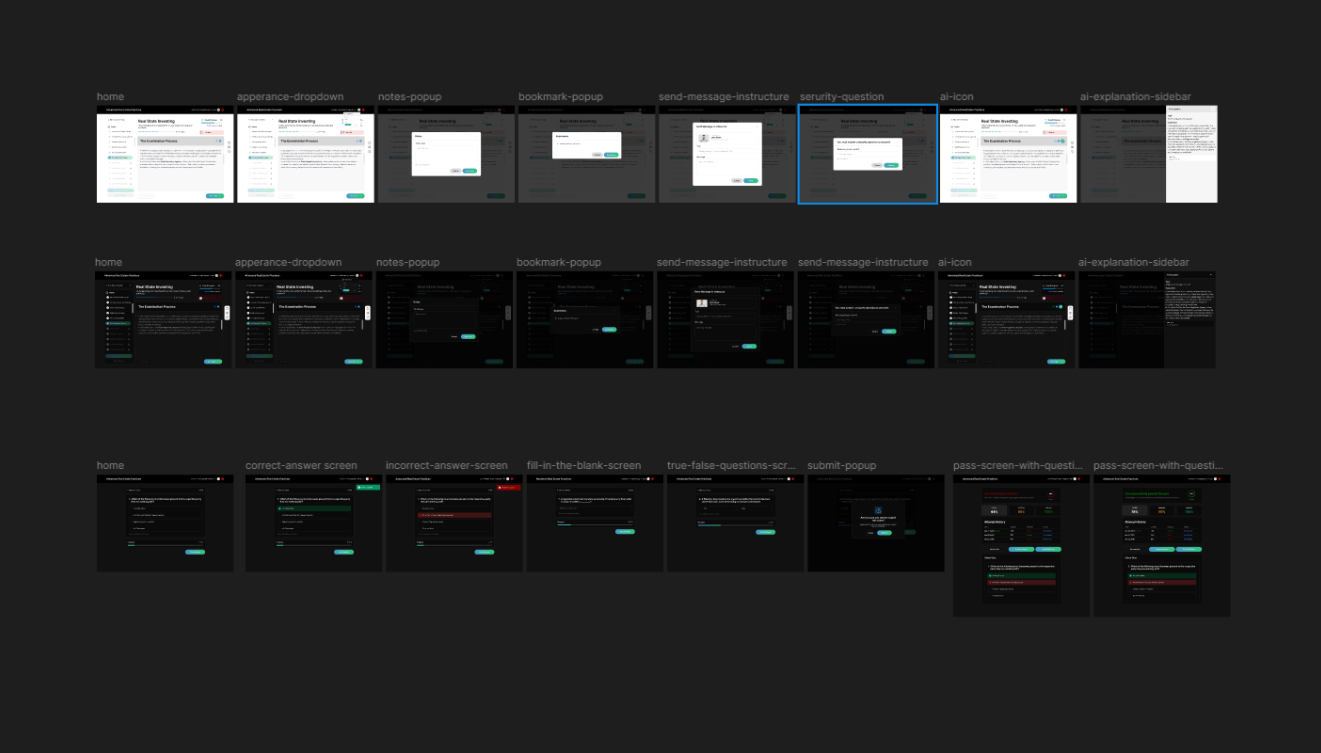
Delivered
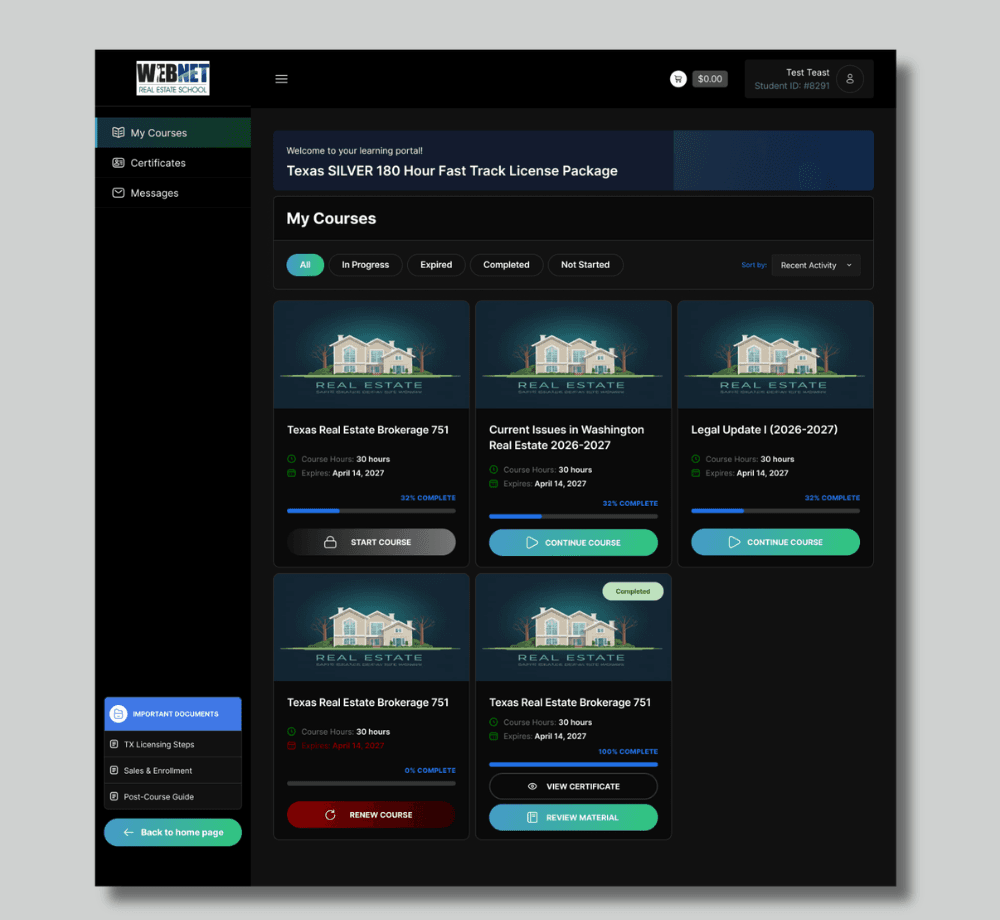
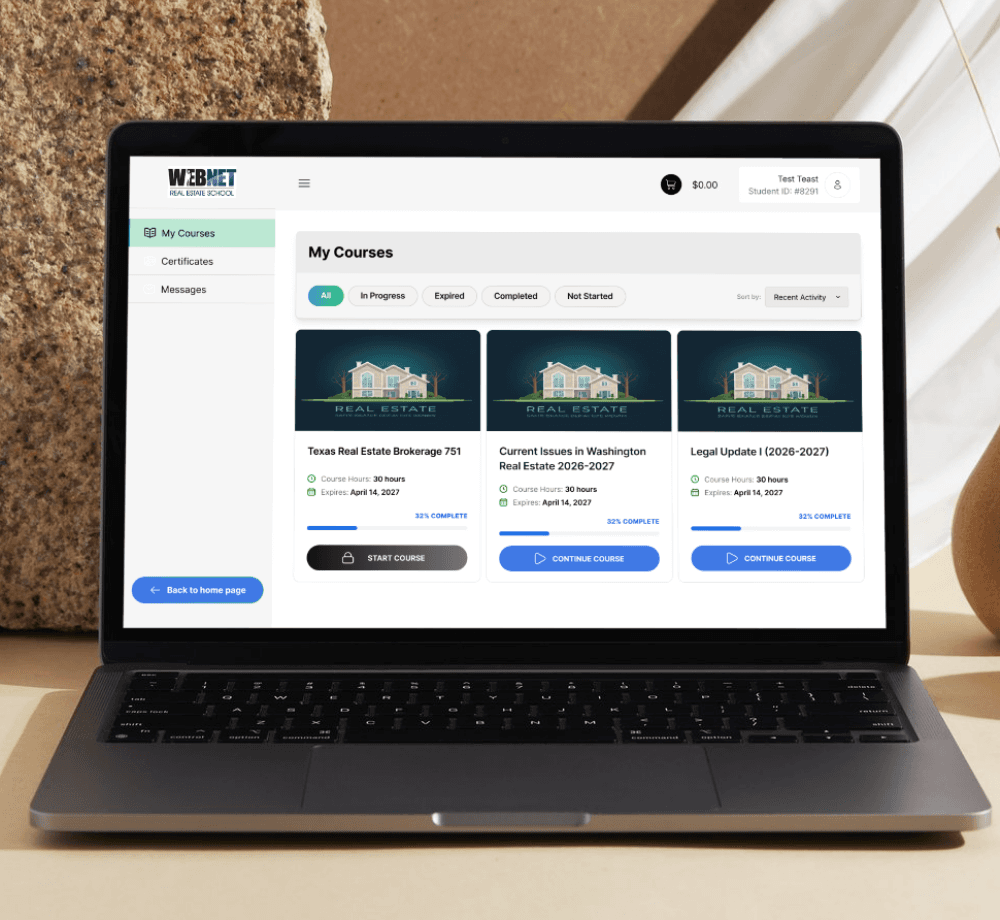
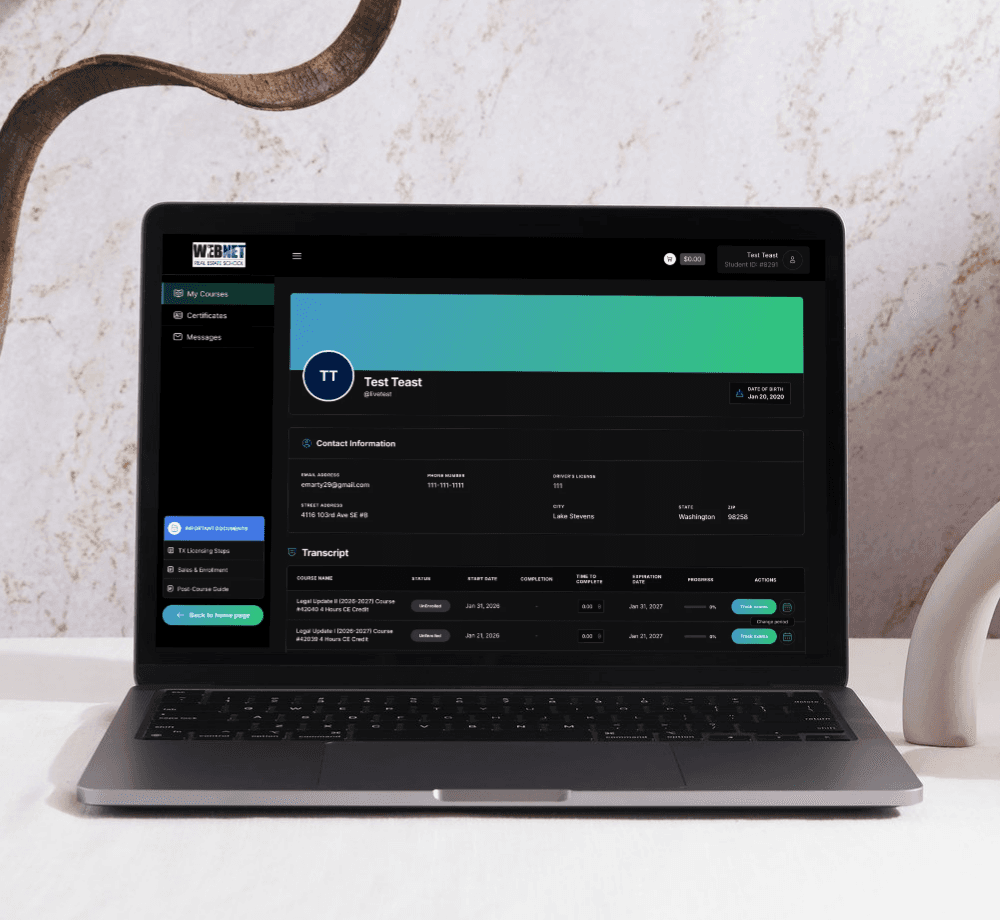
Student Dashboard
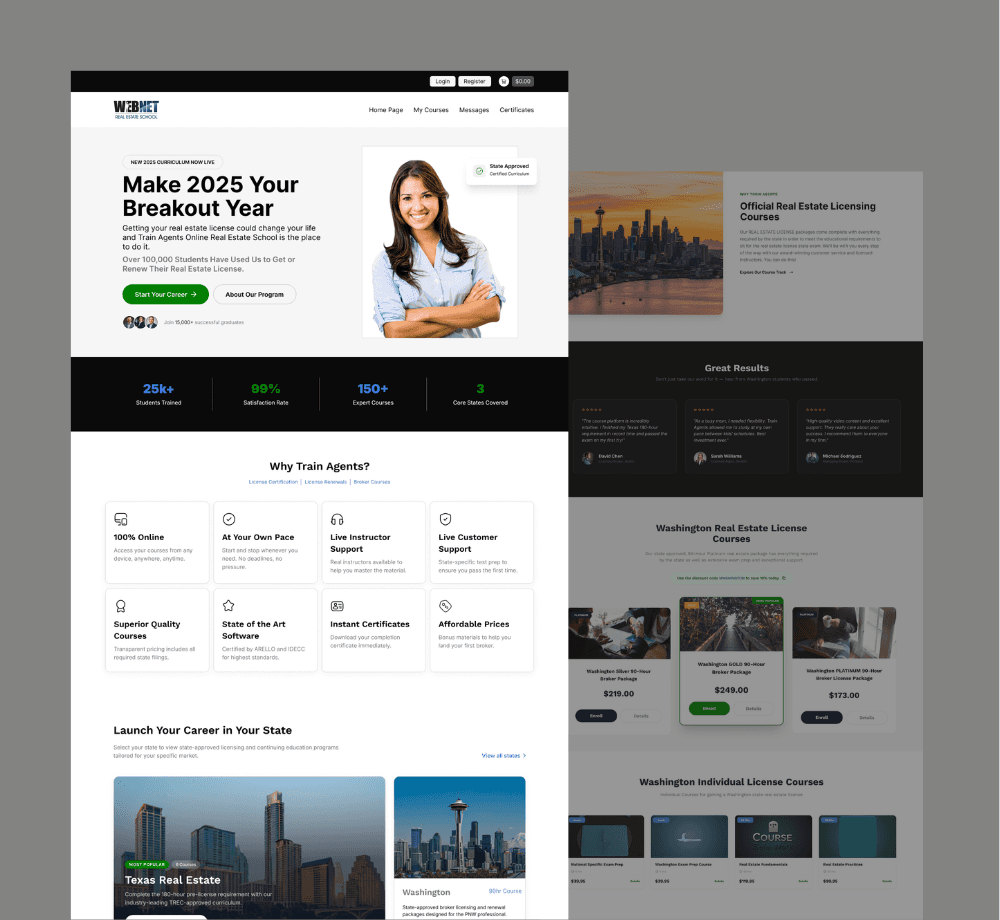
Centralized hub for students to view active courses, track real-time progress, and download certificates, with course cards that adapt their call-to-action based on enrollment status.
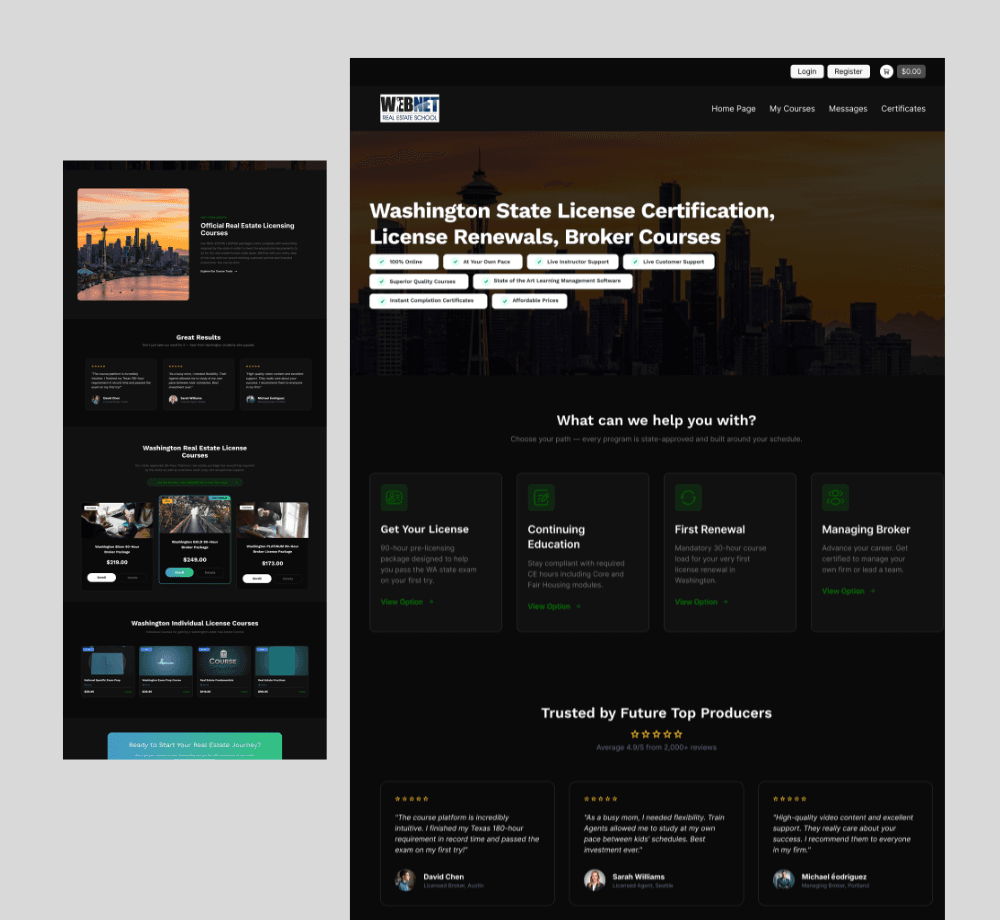
Course Catalog
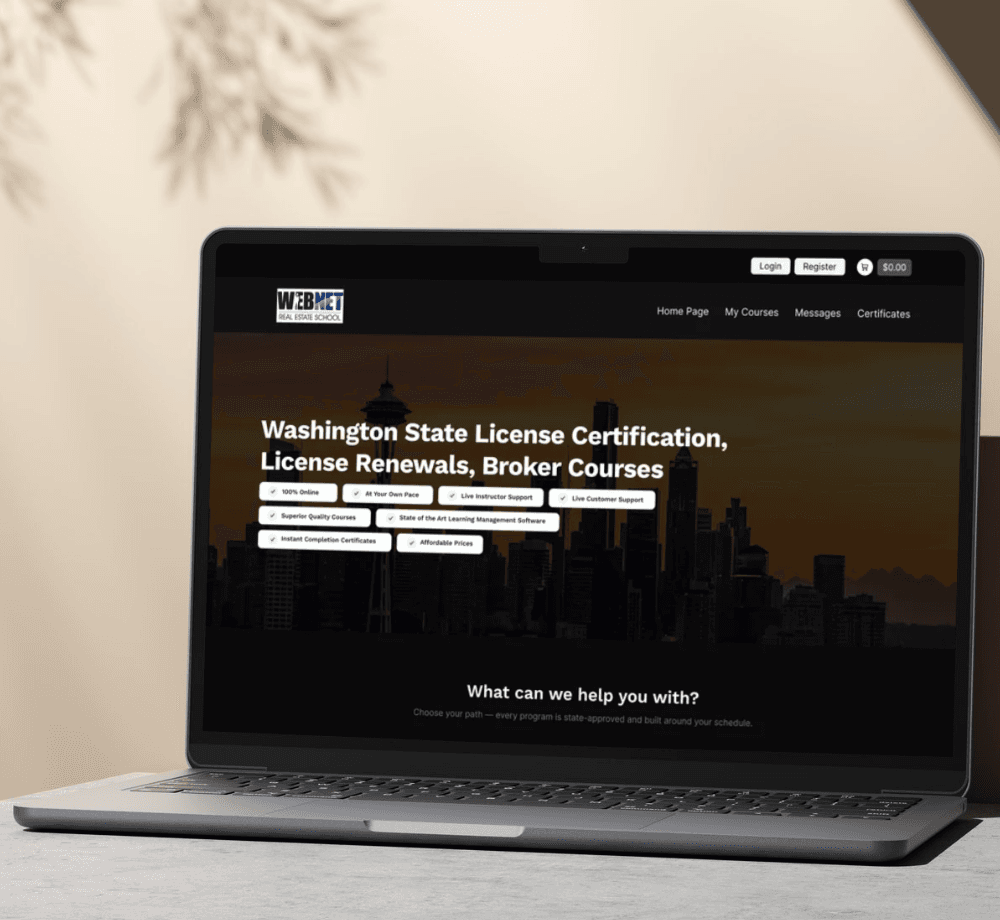
State-specific course listings for Texas and Washington with transparent pricing, package tiers, and customer testimonials from licensed agents.

Support System
Comprehensive support portal with self-service resources, a message form, email and phone support channels, and a dynamic FAQ accordion.
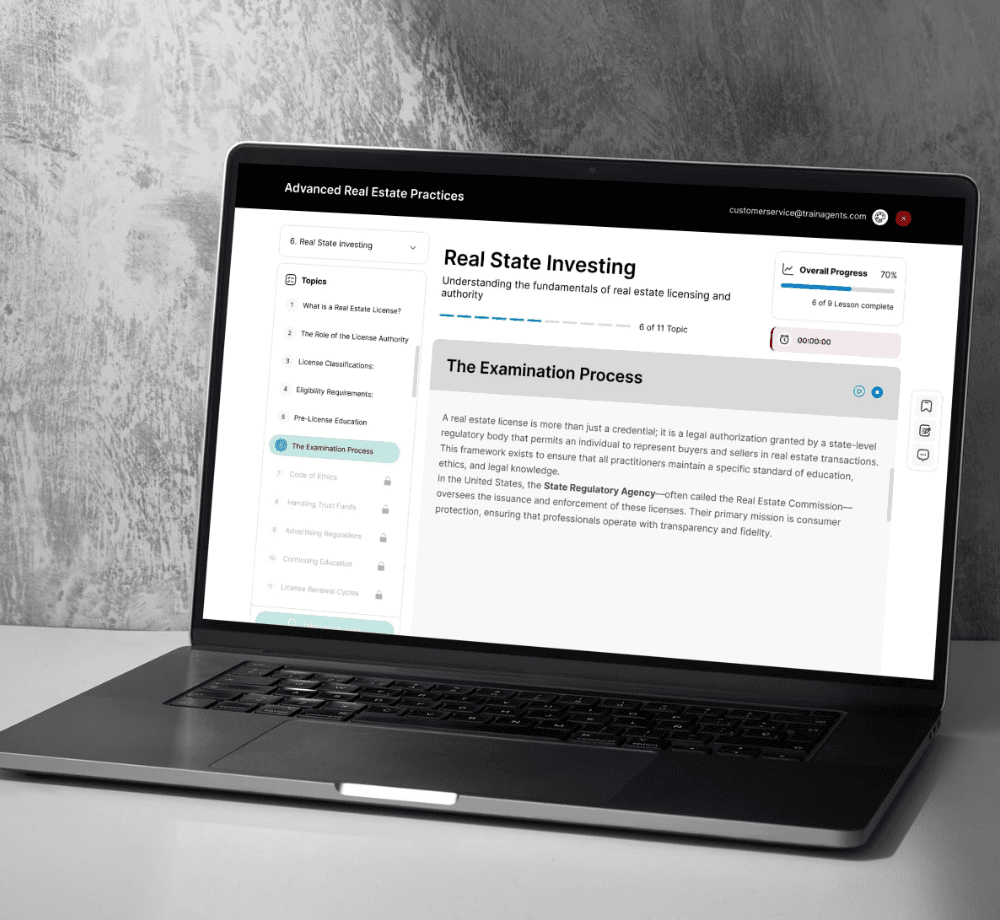
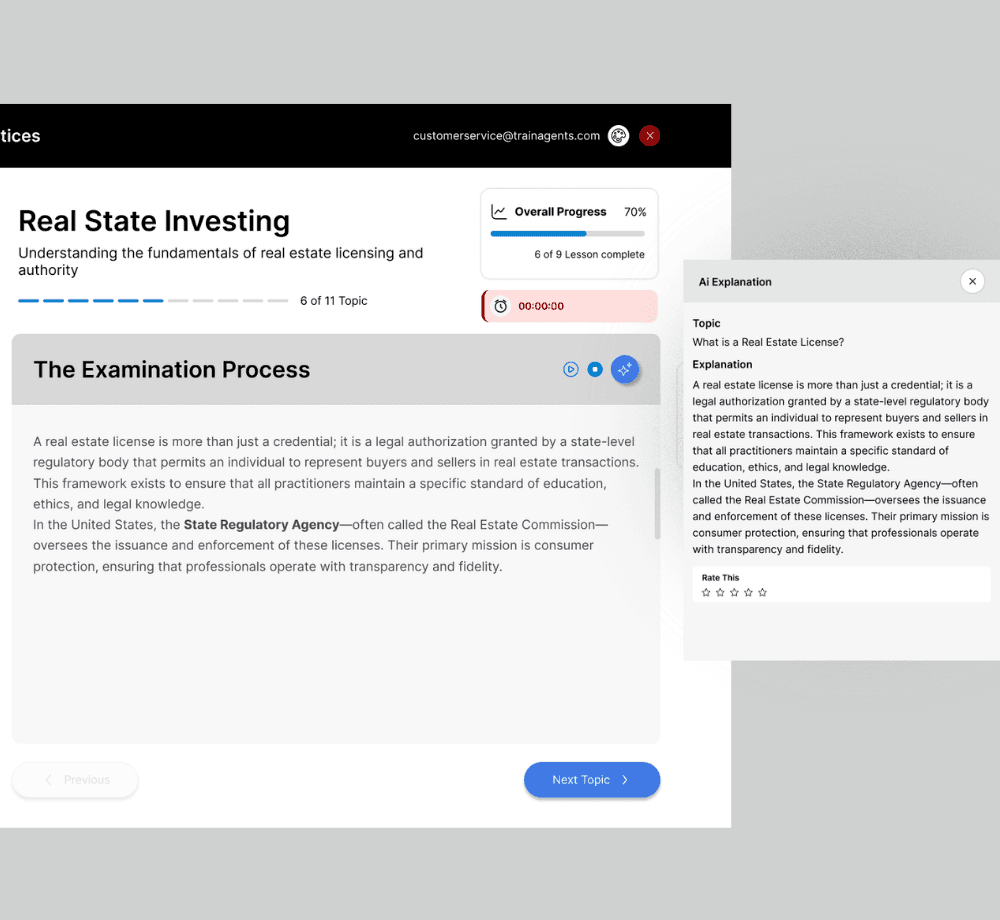
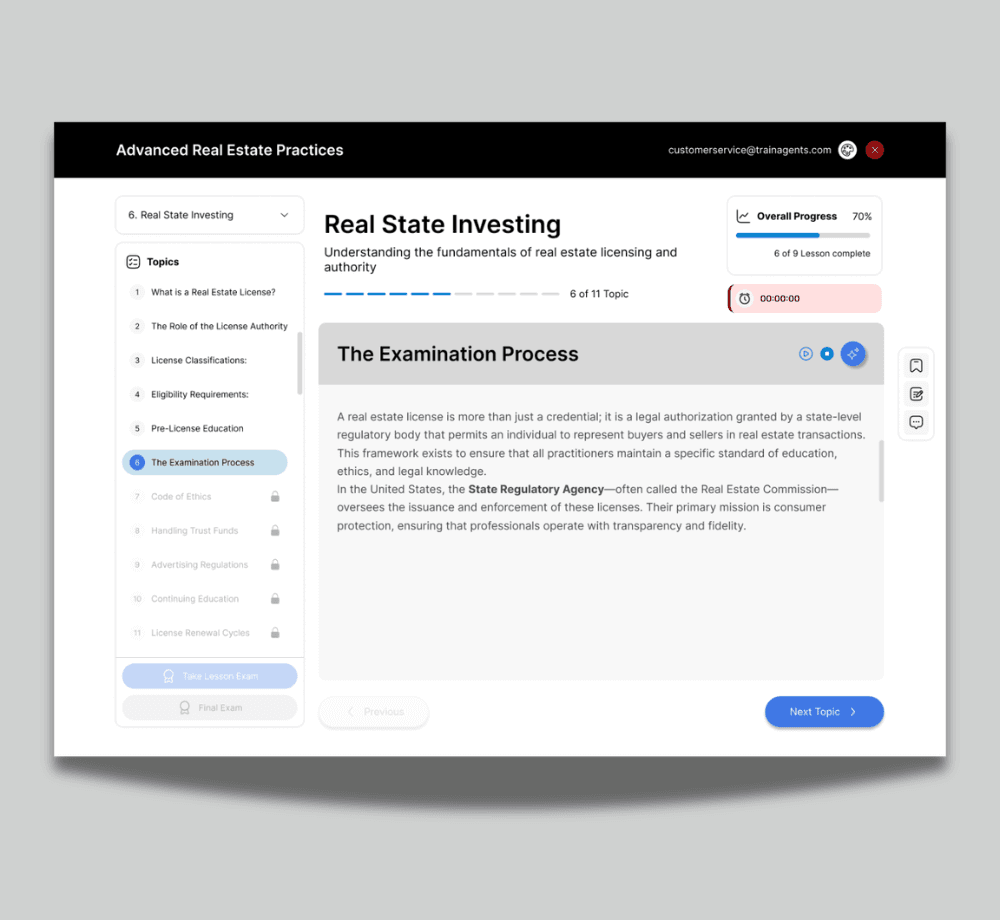
Interactive Reading Modules
Engaging course content with topic-by-topic navigation, timed reading enforcement, and an AI-assisted explanation panel for dense regulatory material.

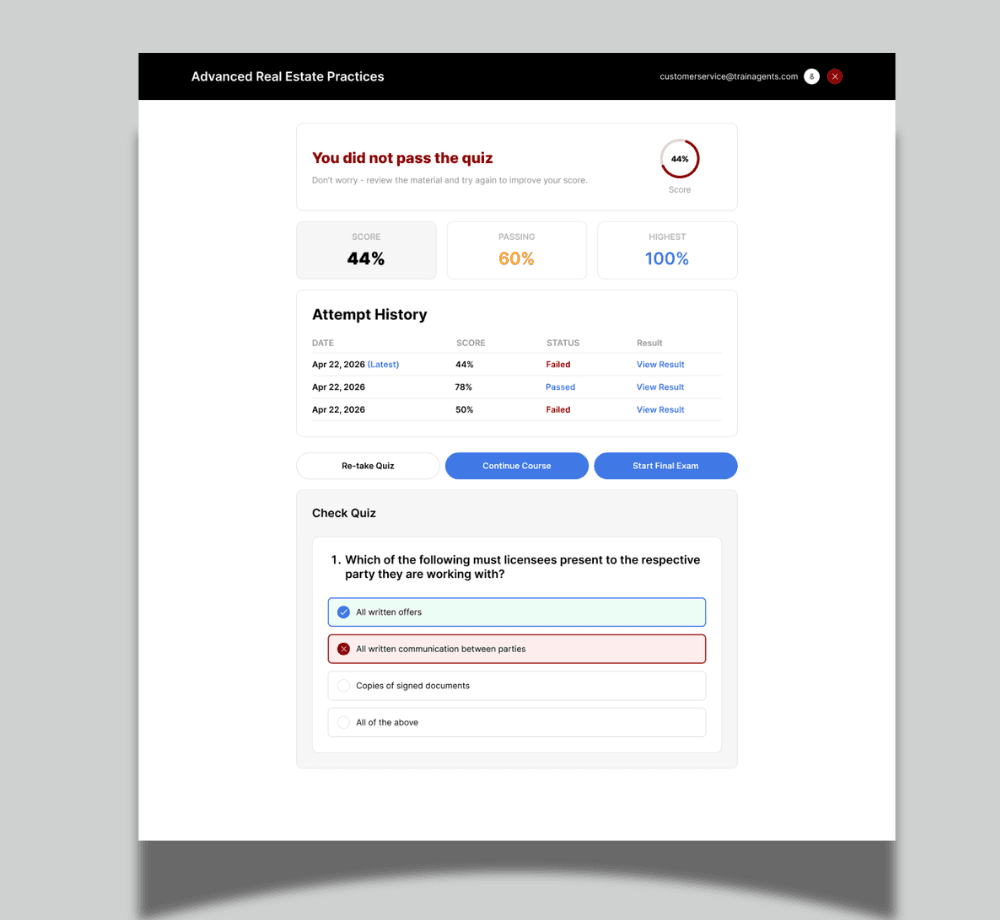
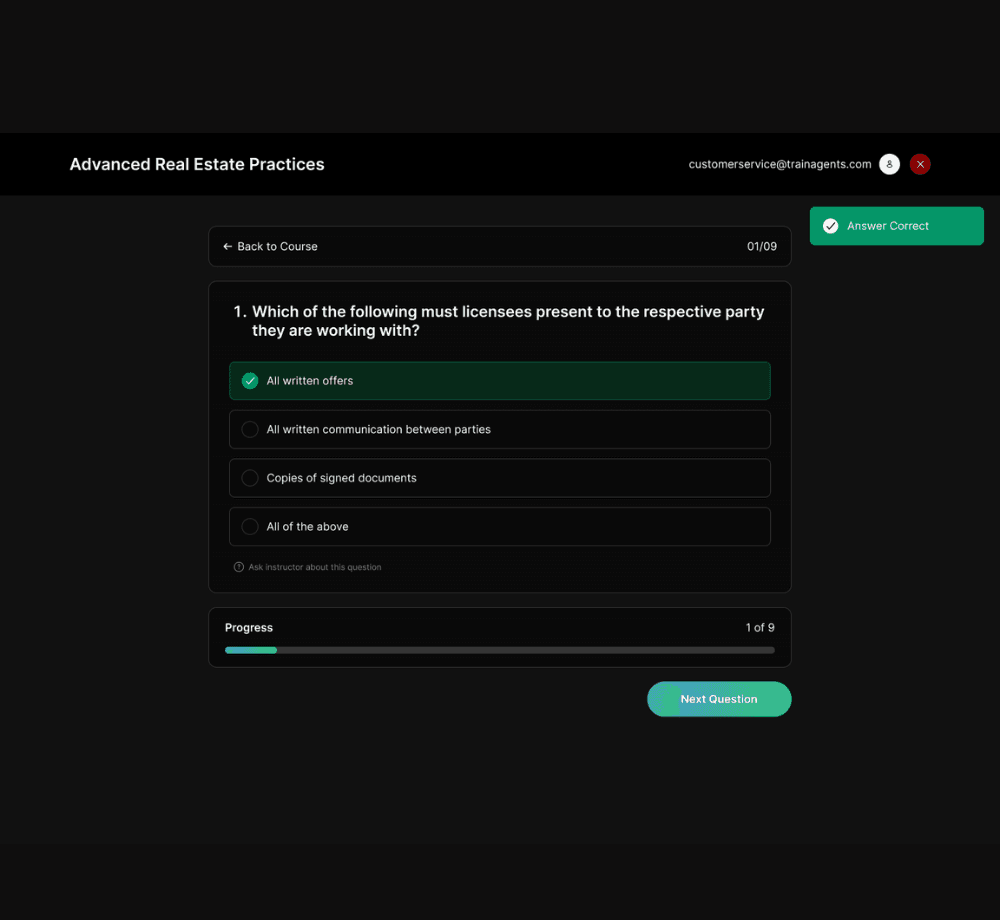
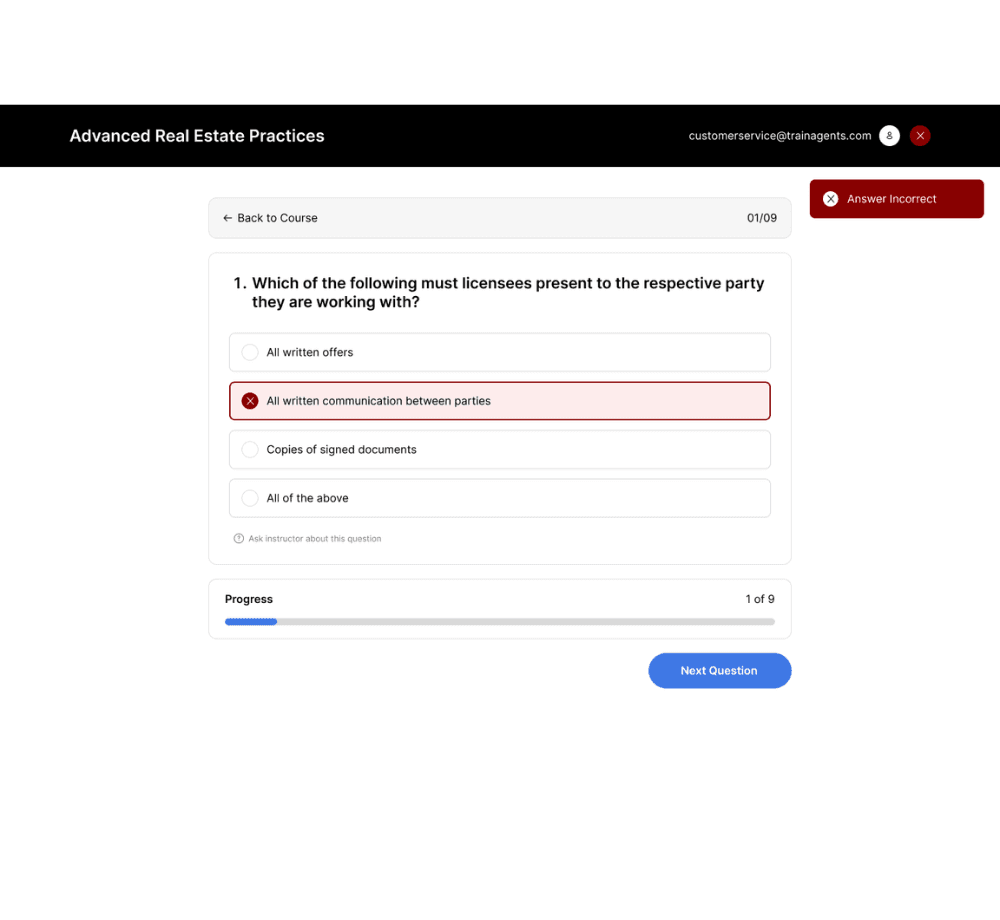
Online Exams & Quizzes
Integrated testing system with multiple-choice questions, instant correct or incorrect feedback in light or dark mode, and a full attempt history.
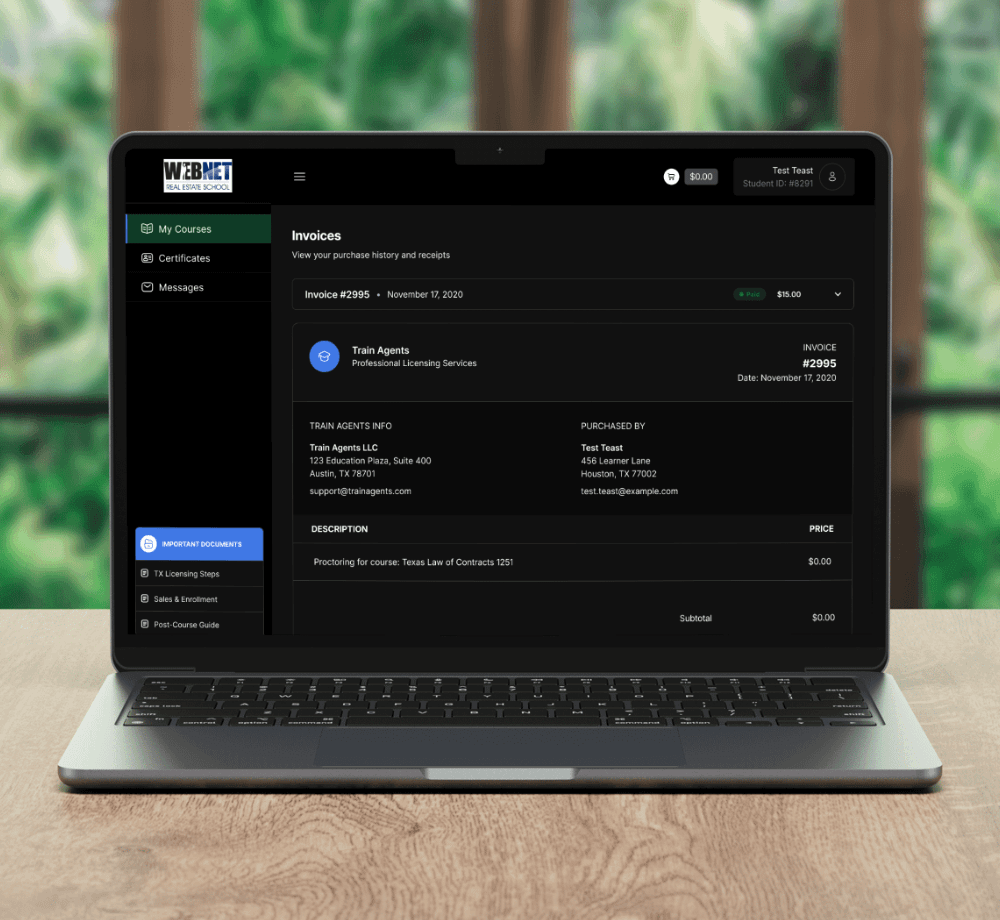
Billing & Transcripts
Automated, itemized invoicing for course purchases and renewals, paired with a complete student transcript view across every renewal cycle.
Gallery

Build with:


“
The portal transformed how we manage licensing across our entire agent network. Submission errors dropped dramatically in the first quarter, and agents now have complete visibility into where they stand at every stage. Mango Coders built something our team genuinely relies on every day.
— Compliance Director, Webnet
This project is part of our web development work. Discover how we can deliver tailored solutions for your business.